
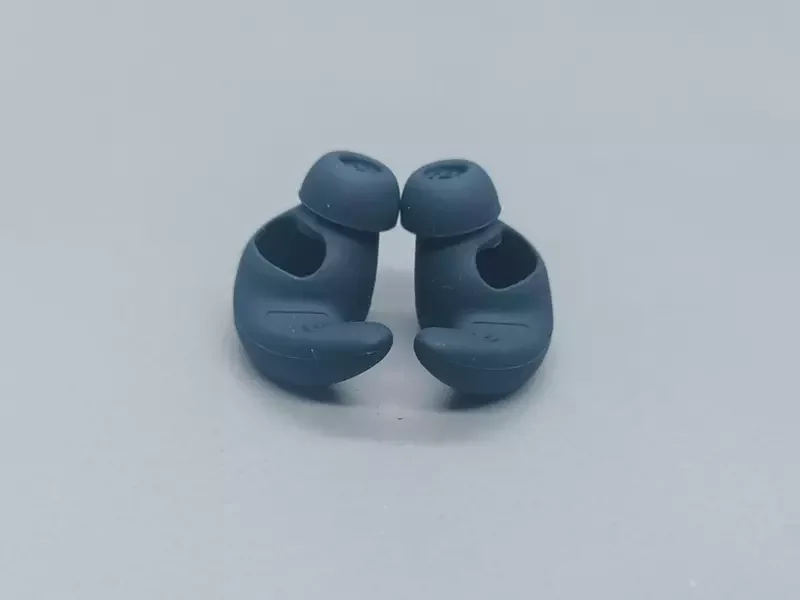
Silicone, with its exceptional flexibility, biocompatibility, weather resistance, and insulating properties, has long been integral to fields like healthcare, consumer goods, and industry. The electronic core is the brain and nervous system of the digital age, responsible for computation, sensing, communication, and control. When these two are not merely assembled but deeply integrated at a molecular level to form a novel material that combines organic softness with intelligent functionality—”Intelligent Silicone”—we are on the brink of a disruptive industrial revolution. This is not just an evolution of materials but a fundamental transformation in human-machine interaction, environmental perception, and service models.
Core Technological Integration Features
- Embedded & Structural Electronics: Embedding or printing micron/nano-scale chips, sensors, and conductive circuits (e.g., liquid metal, conductive polymers) directly into the silicone matrix for seamless integration.
- Energy Autonomy: Integrating flexible energy harvesting technologies (e.g., triboelectric generation, flexible solar films) with micro-energy storage devices (e.g., flexible batteries, supercapacitors) to enable self-powering or long endurance.
- Seamless Communication: Built-in flexible antennas and low-power wireless communication modules (e.g., Bluetooth, NFC, future B5G/6G) for real-time cloud data synchronization.
- Intelligent Response: Detecting environmental stimuli (pressure, temperature, deformation, biochemical signals) and executing predefined feedback (shape-changing, illumination, substance release, electrical stimulation).
Discussion on Cross-Industry Application Development
- Healthcare & Biotechnology: From Treatment to “Human Augmentation”
- Personalized Therapy: Intelligent silicone bandages can monitor wound pH, temperature, and healing factors in real-time, actively release antibiotics or growth factors, and alert medical staff.
- Advanced Prosthetics & Organs: Bionic prosthetics with embedded pressure and electromyographic sensors provide realistic tactile feedback and fine control. Intelligent artificial organs (e.g., heart wraps) can continuously monitor physiological metrics and make adjustments.
- Immersive Drug Delivery: Ingestible or implantable intelligent capsules for precise drug delivery or sampling at specific locations and times within the body.
- Surgical Robots & Endoscopes: Intelligent silicone surgical tools with haptic sensing (force feedback) enable more precise and safer remote surgery.
- Consumer Electronics & Wearables: Unobtrusive and Context-Aware
- “Second Skin” Devices: Intelligent silicone patches akin to invisible bandages for continuous monitoring of heart rate, blood glucose, alcohol levels, etc., replacing current rigid watches/bracelets.
- Context-Aware Interactive Interfaces: Intelligent silicone integrated into clothing, furniture, and steering wheels enables control of surrounding devices through gesture and grip pressure sensing, facilitating screenless interaction.
- Immersive Entertainment: Full-body motion capture suits and haptic feedback gloves/clothing will become thinner, more comfortable, and sensitive with intelligent silicone, vastly enhancing the realism of VR/AR/Metaverse experiences.
- Industry 4.0 & Robotics: Soft Mechatronic Systems
- Collaborative Robots (Cobots): Robotic arms coated with intelligent silicone skin, equipped with full-body tactile perception, can work safely alongside humans, handling tasks like grasping fragile objects or precision assembly.
- Industrial Inspection & Monitoring: Crawling or slithering intelligent silicone robots can enter complex environments like pipelines and turbines to detect cracks, corrosion, or gas leaks.
- Adaptive Grippers & Fixtures: Flexible grippers that automatically conform to and adjust gripping force based on an object’s shape, greatly enhancing the flexibility of automated production lines.
- Automotive & Transportation: Intelligent Interiors and Active Safety
- Smart Cockpit: Steering wheels, seats, and interior panels integrated with driver status monitoring (fatigue, distraction), temperature regulation, and gesture control.
- Active Safety & Maintenance: Intelligent silicone tires can monitor tire pressure, temperature, wear, and road conditions in real-time, predicting blowout risks. Engine seals can self-monitor aging and issue warnings.
- Soft & Humanoid Robots: Serving as the muscles and skin for robots, providing strength, flexibility, and environmental perception—key materials for future service robots.
Outlook:
The fusion of “Silicone Material × Electronic Core” signifies the complete dissolution of the boundary between the physical and information worlds. In the future, our surrounding environment will no longer consist of silent, passive objects but will become an “intelligent substrate” with sensing, computing, response, and communication capabilities. This will spawn entirely new product forms, service models, and business ecosystems, shifting the core from “product-centric” to “experience-and-service-centric.” Ultimately, this Intelligent Silicone Revolution points toward an age of ubiquitous intelligence, where all things possess “spirit” (intelligence) and humans, machines, and matter are deeply integrated, redefining how we coexist with technology.